
Article by Clara Röhrig
For one weekend, young people in Bremen turned asphalt into community— showing that public space belongs to everyone who dares to use it differently.
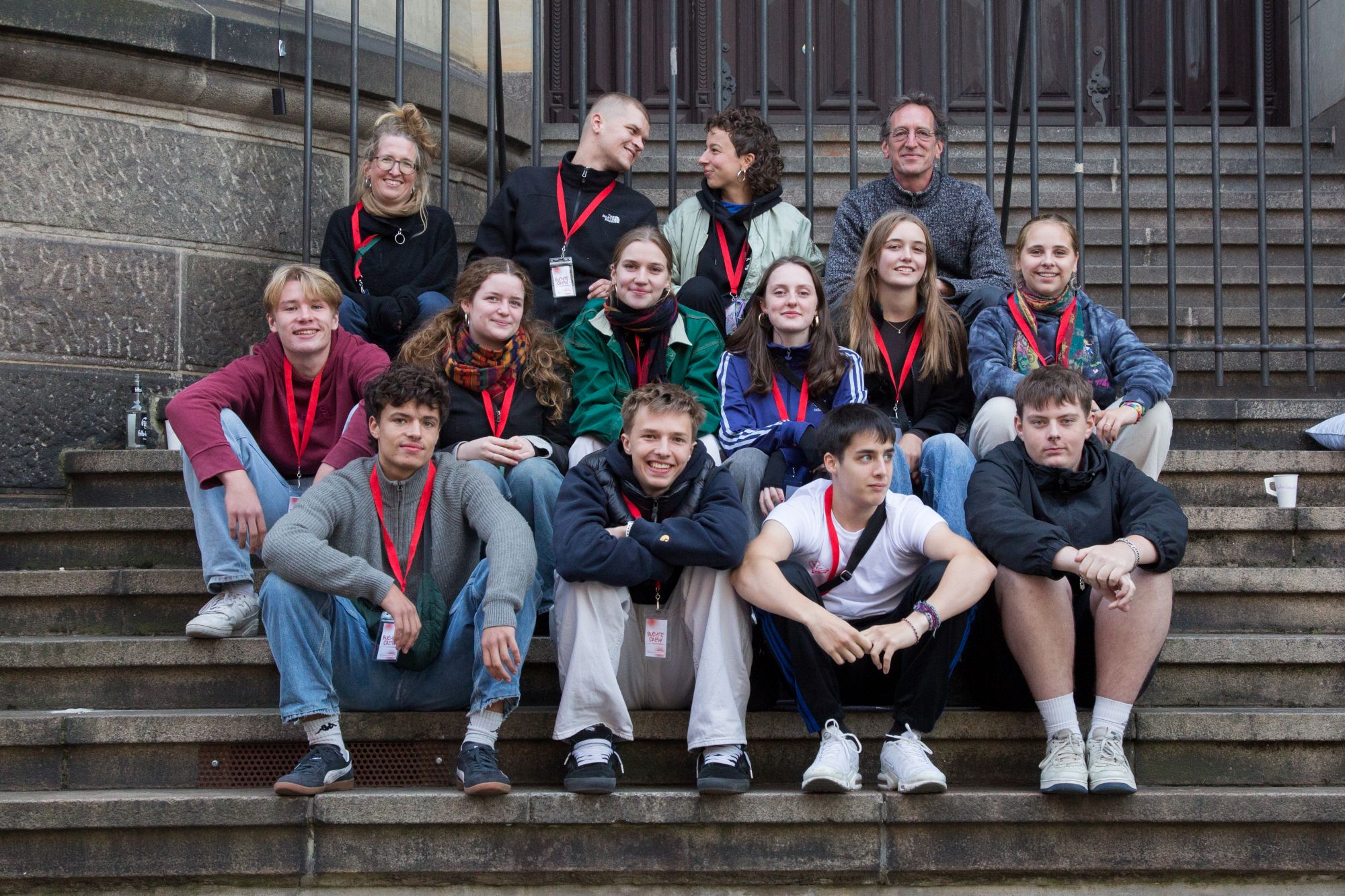
It’s a hot day in August 2024 in Bremen. In the building of the local police department, a meeting is taking place. Around a big square table, several groups are gathered: people from the municipal authorities, representatives of the public transport office… and then there’s us — four teenagers and three youth workers from the youth center Buchte of NFJ Bremen.
For months, we’ve been planning a big street festival. It all started with an idea from the young people who regularly meet at our youth center. The Buchte is located right in the city center of Bremen, on a small street mostly used by cars heading to the nearest parking garage or by delivery vans supplying local shops. The sidewalk on one side is just wide enough for a wheelchair or a stroller, while the other side doubles as a bike lane.
Frustrated by the lack of open space, the young people from our group started playing volleyball on the street one summer — whenever there were no cars passing through. That experience got them thinking: What if we could decide how to use the public space outside our youth center? What if it could actually meet our needs?
That’s how the idea of temporarily closing Buchtstraße, the street where the youth center is located, was born. With support from youth workers, the teens applied for funding from the Project Office for the City Center, which promotes projects that make Bremen’s city center more diverse and vibrant. With their creative ideas, they received the highest possible grant — and planning officially began.
The goal was to close the street for at least a week and turn it into a place to hang out, meet friends, and spend time together — all without having to buy or consume anything. The idea of “consumption-free” spaces is central, especially in a city center dominated by businesses and private property.
It quickly became clear that getting approval from the city authorities would be the biggest challenge. The first application was rejected because a long-term closure of Buchtstraße — a key delivery route for downtown shops — was deemed impossible.
To find a solution, we met with a city planner and worked out a traffic strategy. We also talked with local shop owners to better understand their delivery schedules. Using this information, we submitted a second application, but it too was rejected. The argument was the same: a street closure during the week would block delivery traffic, and Buchtstraße was considered too important for overall traffic flow in the city center.
As the planned closure date in mid to late August approached, it became clear that the project couldn’t happen as planned — summer holidays were coming up, many of the young participants were away, and our own capacity was reduced. So we decided to postpone the closure until September.
During a youth trip to Berlin at the end of July, we drafted a new proposal — this time limiting the closure to just one weekend. But after several weeks of waiting, that application was also rejected. Only after repeated inquiries, we were invited to the meeting mentioned in the beginning.
That meeting at the police station turned out to be the real turning point. During the two-hour discussion, we finally understood the core problem: the traffic lights at the nearby intersection would have to be switched off during the closure — something the authorities considered a serious safety risk. Still, the meeting was incredibly helpful for understanding different perspectives and finding practical solutions. And in the end we worked something out in that meeting which was being accepted by the authorities and the festival was finally within reach.
But now, there were only two and a half weeks left until our festival — and the final stretch of intense planning began. We had done as much preparation as possible in the months before, but without official approval it had been tough to finalize anything. Now it was time to confirm the program: a colorful mix of concerts, workshops, and fun activities.
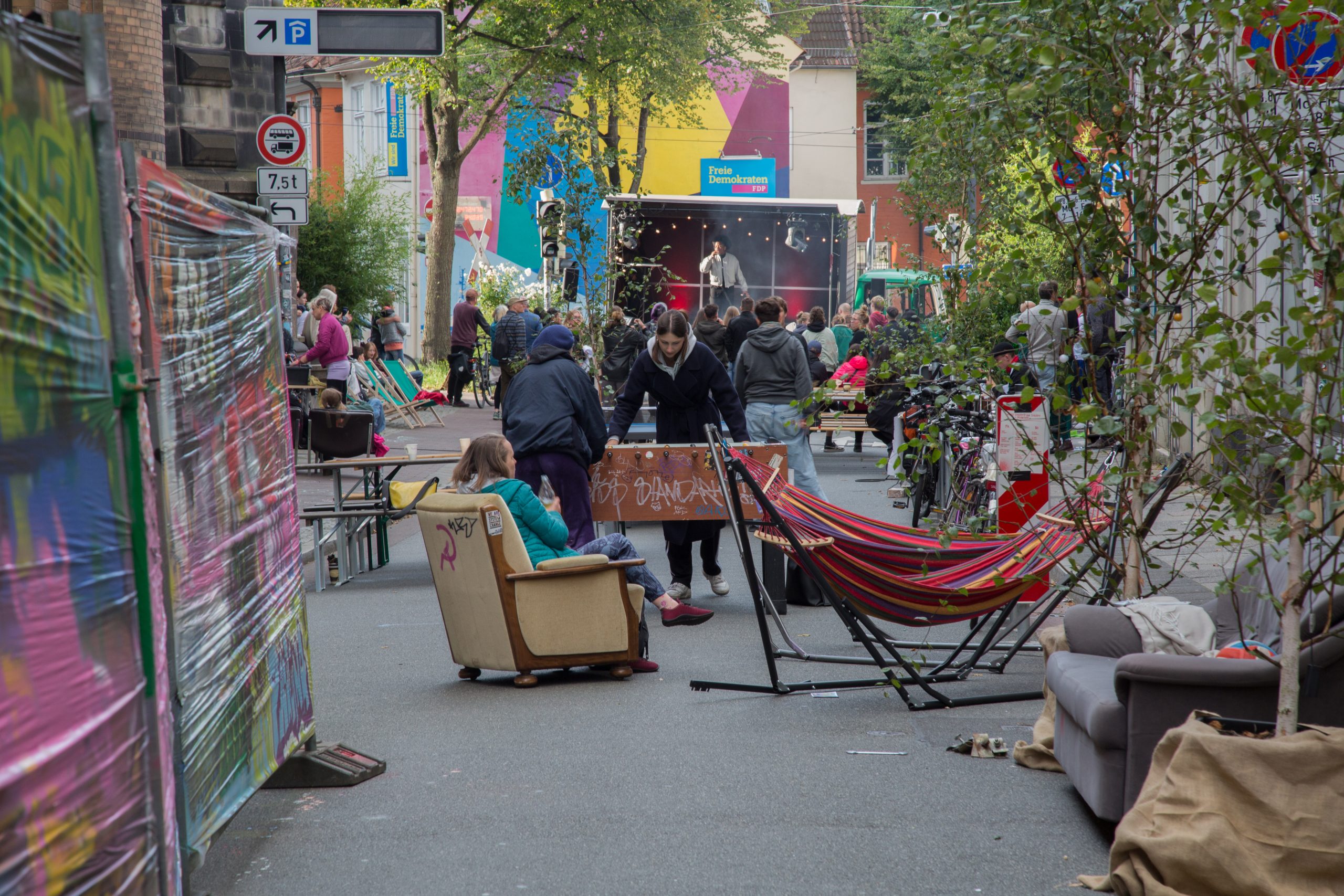
In the end, we were thrilled with how the festival weekend turned out. We managed to achieve two main goals of our project: despite the festival atmosphere, Buchtstraße became a real place to stay and hang out. People lingered, passers-by joined spontaneous table-tennis games, and small groups relaxed on sofas and hammocks. Many residents and visitors told us how nice it would be if the street could permanently become a calm, welcoming spot in the city center — a place to meet others without the pressure to consume.
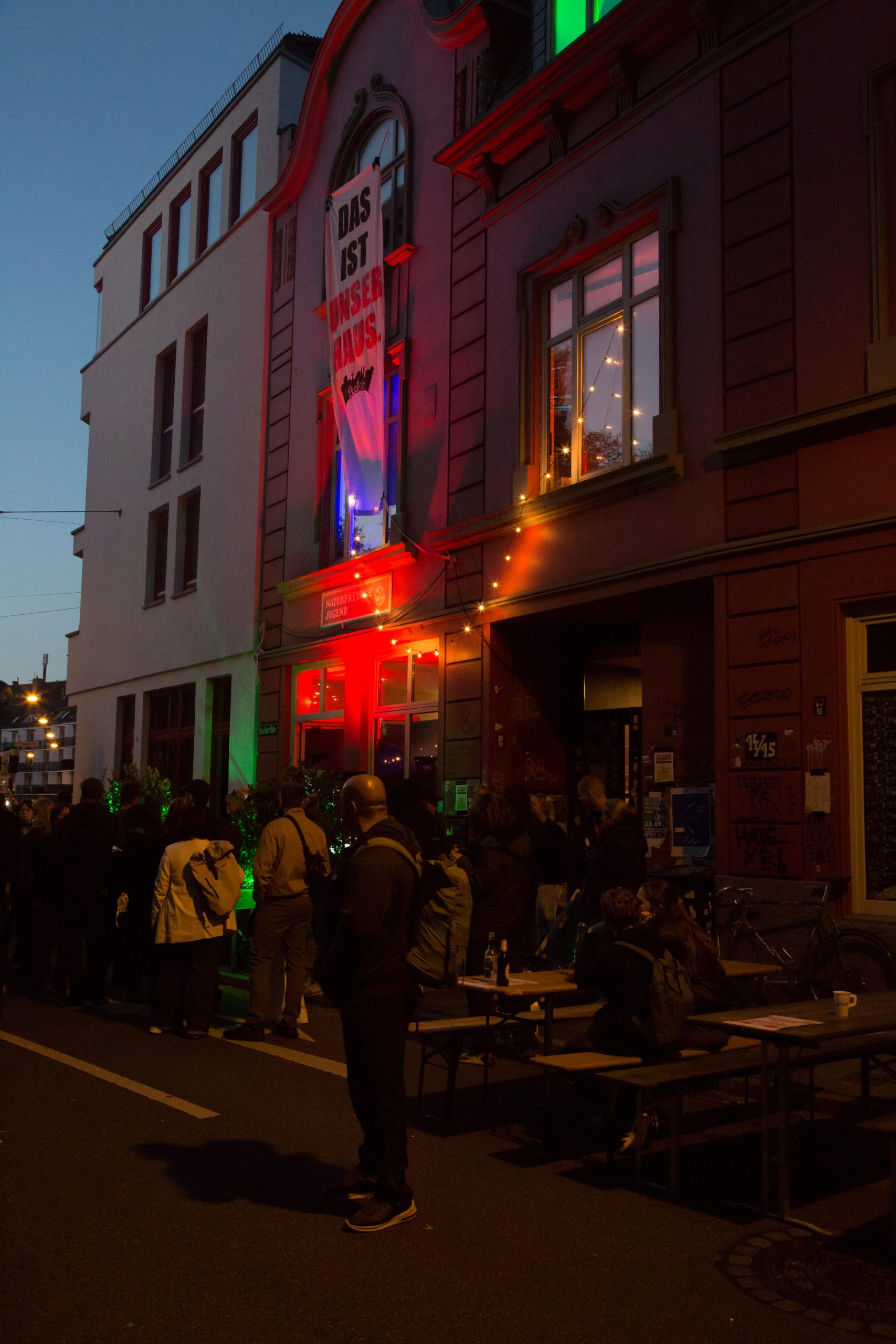
We also achieved our second goal: letting young people take over the street for the weekend. It was important to us that Buchtstraße became a space shaped by and for young people, reflecting their interests and needs. Working together with them in a participatory way was essential — they had clear ideas of what they wanted, and it was a joy to help bring those ideas to life.
Throughout the weekend, we received only positive feedback. Residents, passers-by, and die Buchte’s regular visitors all loved the transformation and immediately asked when we’d do it again. Surprisingly, there were no noise complaints or visits from the police or public order office.
Through Instagram, we reached a wide audience and felt that both the Jugendhaus Buchte and Buchtstraße became more visible as a space in the city center. But most importantly, the young people from our youth center had the empowering experience of seeing one of their own ideas come to life. After all their effort, they realized they really can make a difference — and believe in the change they want to see.
Links
Youth Center “Die Buchte” https://www.instagram.com/naturfreundejugend_diebuchte/
Instagram of the Street Festival “Whose Street? Our Street!” https://www.instagram.com/whose.street.our.street/
