
Article by Naturfreundejugend
Restoring peatlands to support healthy wetland ecosystems and carbon storage. A short report about the international Swamp Savers Camp in Kesselbach, Brandenburg/Germany. Do you want to know what a swamp camp is like? Grab your shovels, ready, set, go!
In early September 2025 deep in a beautiful forest, 42 young people aged 15 to 25 from seven countries (Lithuania, Latvia, Croatia, Czechia, Poland, Turkey, and Germany) gathered to restore a former swamp area near Calau (Niederlausitz). This was the third time that a Naturefriends Youth camp had been held here in cooperation with other associations, and in 2025, it became international for the first time. The camp was organized in cooperation with the Kulturnetz e.V. association.
Facts first: about 7 percent of the annual CO₂ emissions in Germany are coming from drained swamps. This is roughly equivalent to the annual emissions of either the industrial or the agricultural sector in Germany. Drying up land to make it usable for human needs has been practiced for thousands of years. But since the 1950s, an increasing amount of swamp areas in Germany have been drained for agricultural use, leading to massive CO₂ emissions. This is because when peat, which is normally preserved under water, encounters oxygen, it dries out. This oxygenation allows microorganisms to break down the carbon stored in the peat, releasing it into the atmosphere as CO₂. Thus, drained peatlands are transformed from former carbon sinks into significant sources of greenhouse gases. Every 10 cm drop in water levels leads to an additional 5 tons of CO₂ emissions per hectare. In 2020 alone, drained swamplands in Germany accounted for approximately 53 million tons of CO₂ equivalents (CO₂ eq).
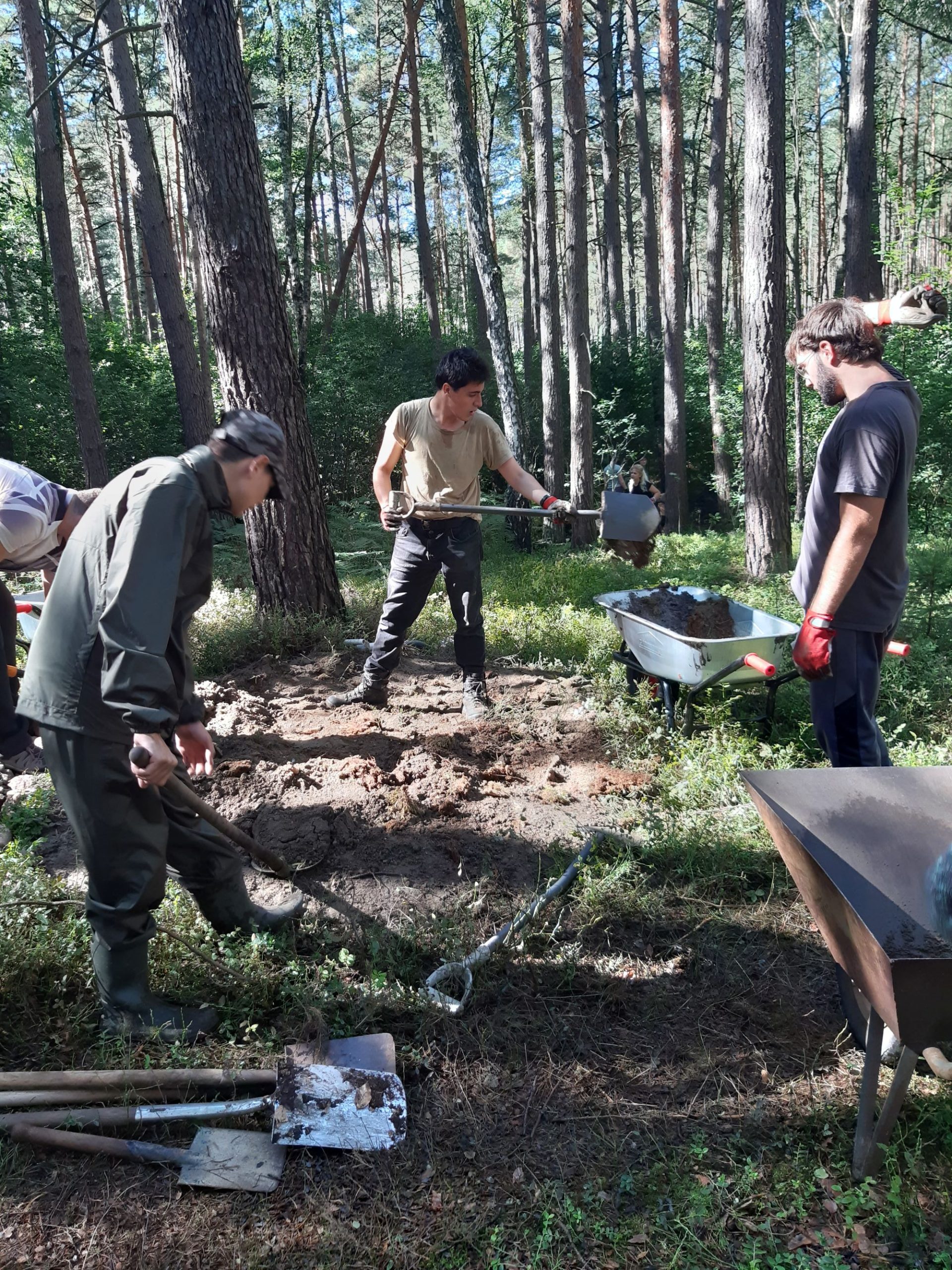
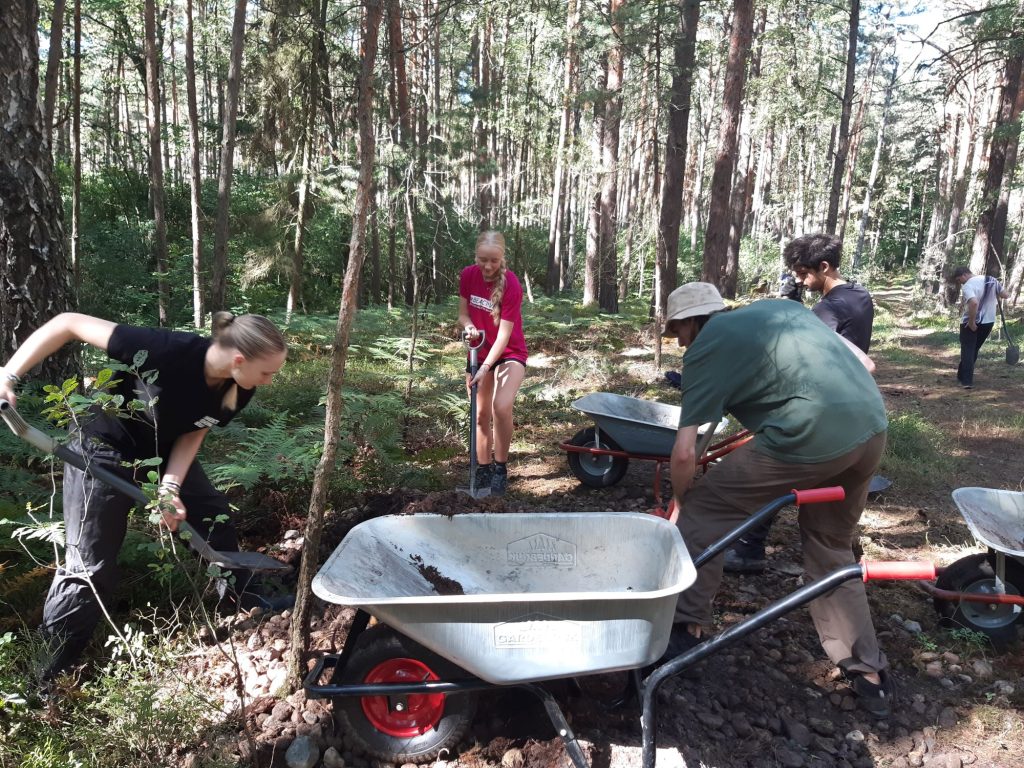
Now back to the camp: For five days, the participants shoveled, hauled, and dug in the “Kesselbach” area. The group dug trenches, erected walls of black locust posts from the forest, and sealed everything with clay, sand, and stones, successfully creating five new seals from entirely natural materials. These structures ensure that the water now accumulates again, allowing a swamp area to develop. Success was visible after just a few days, as the urgently needed water was already gathering at the newly completed seals.
Once the work was done, it was time for some leisure activities! For example, participants were transported in wheelbarrows or competed to see who could stand deepest in the mud. And, in honor of those who carried the water out of the digging holes in buckets after the rain, forming a transport chain, a spontaneous dance and bucket chain party with music was organized. In addition to building the seals, the group also cleared a dry lake of young trees and shrubs, which will hopefully soon be filled with water again. The local wildlife was on full display, allowing the young people to observe praying mantises, grass snakes, slow worms, and several dragonflies.
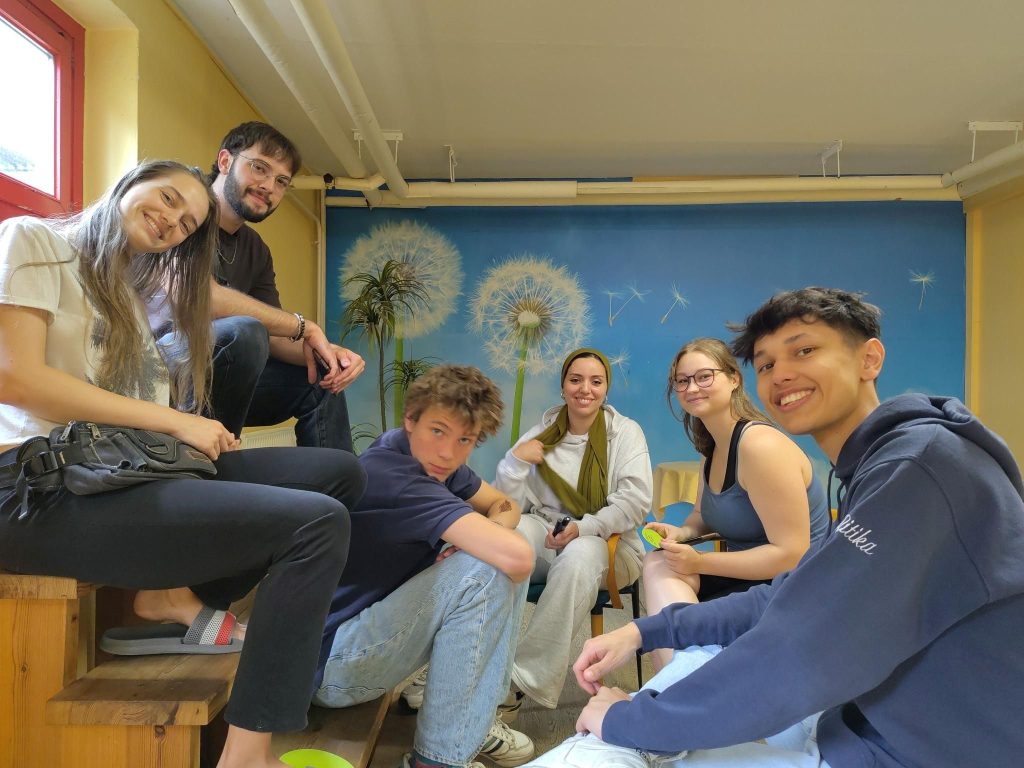
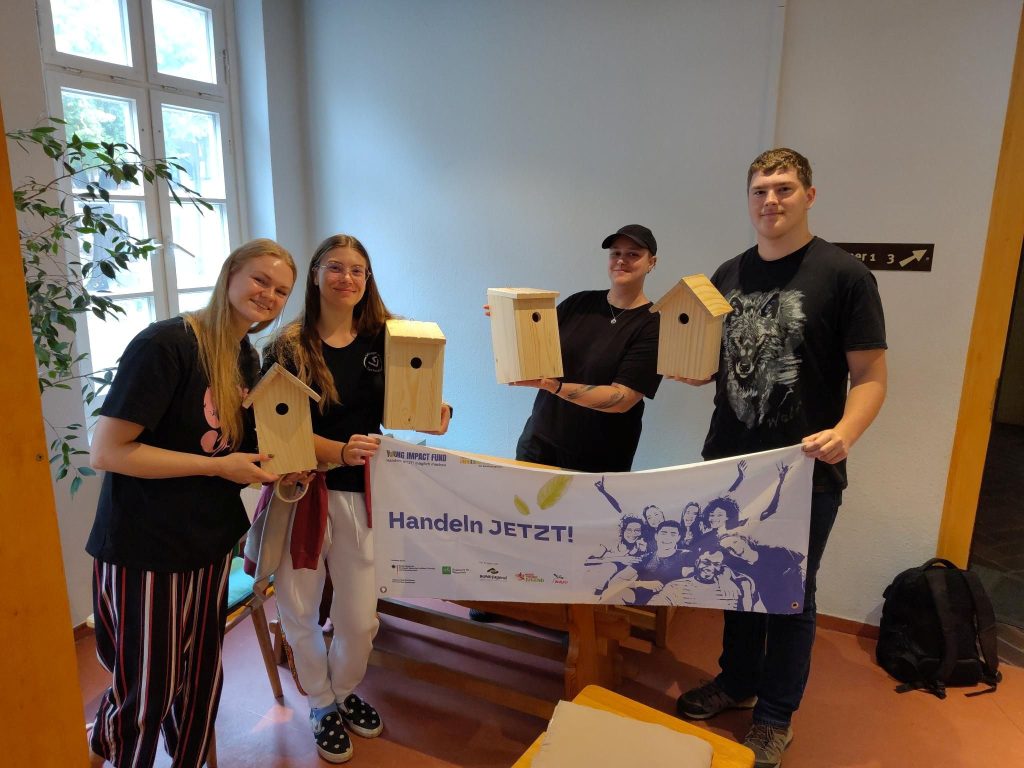
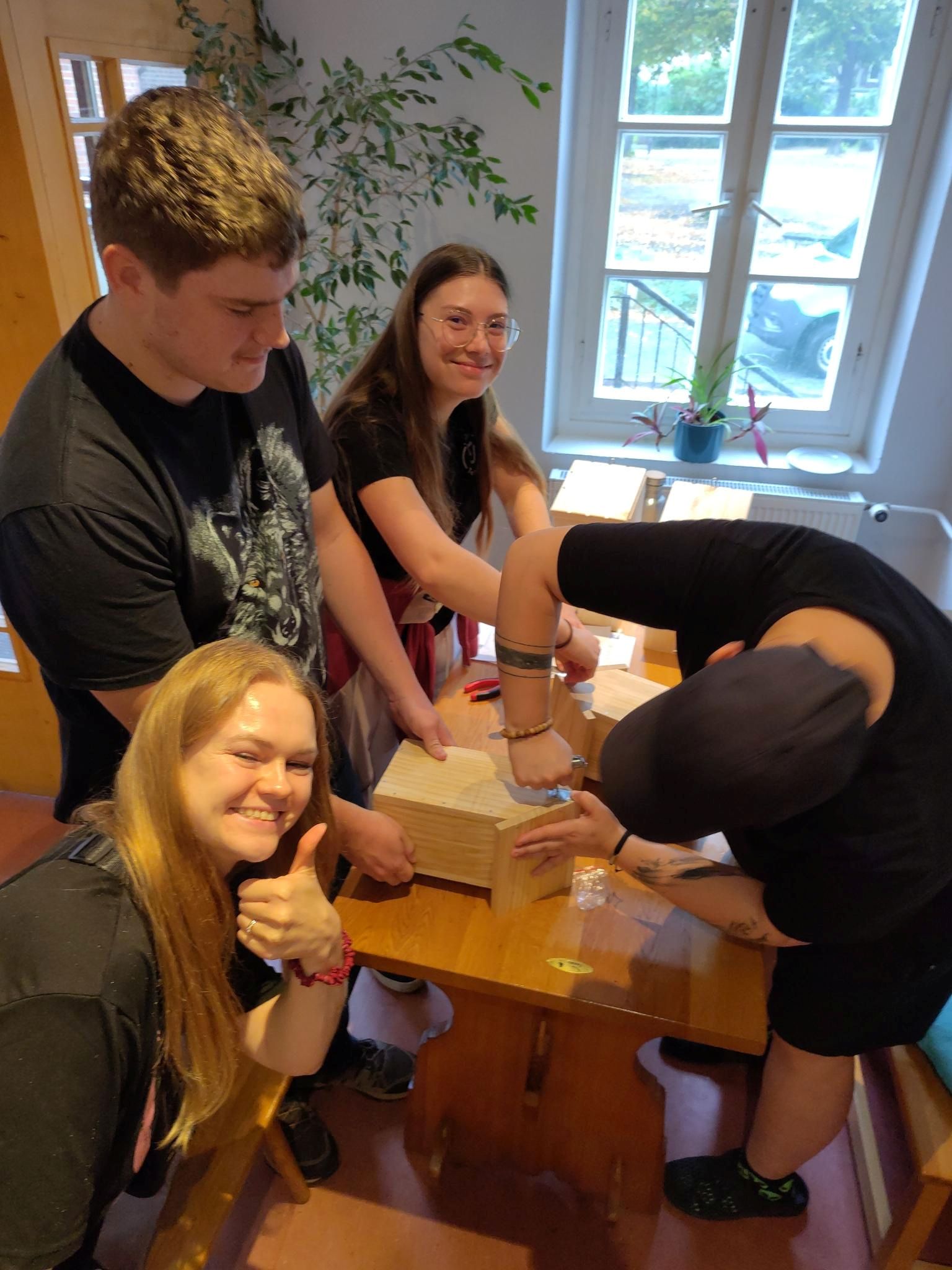
In addition to the work in the moor, there was also a rainy morning when bird nesting boxes were built, a cultural evening where everyone presented their countries of origin and tasted snacks from their regions, a rally, and excursions to the former sites of operation, as well as to the “Ostsee”, a lake in the former coal mining area next to Cottbus.
The project was conducted by Naturfreundejugend Brandenburg and Kulturnetz e.V..
Kindly supported and sponsored by Naturfreundejugend Deutschlands e.V., We want Moor and Jörg Kubik, Stadt Calau, Naturpark Niederlausitzer Landrücken and Erasmus+.

2 thoughts on “Rewetting Peatlands: From Carbon Source to Carbon Sink”